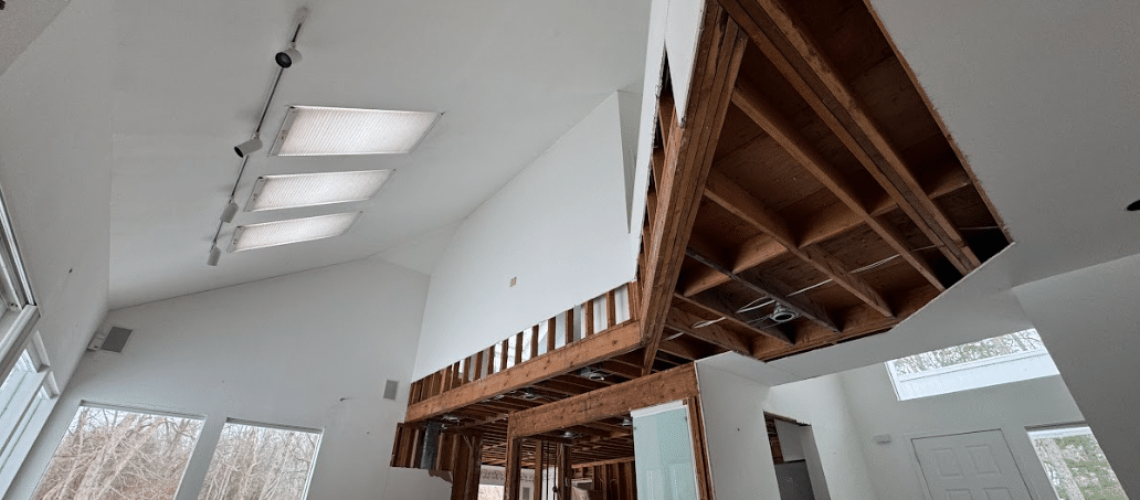
Water damage is not always obvious. In many cases, the most serious issues develop beneath the surface. That is why understanding structural water damage signs is essential for homeowners. At East End Flood & Fire Restoration, we often see damage that could have been prevented with early detection.
When water reaches structural materials, it can weaken your home’s foundation and support systems. Over time, this leads to costly repairs and safety risks. Therefore, recognizing the warning signs early can save you time, money, and stress.
Key Takeaways
- Structural water damage often develops behind walls and under flooring.
- Common structural water damage signs include sagging ceilings and warped floors.
- Hidden moisture can weaken framing, subfloors, and load-bearing walls.
- Early detection reduces repair costs and prevents mold growth.
- Professional inspection ensures accurate identification of structural damage.
What Is Structural Water Damage?
Structural water damage affects the core components of your home. Unlike surface-level issues, it impacts materials that support the building. These include framing, beams, subflooring, and load-bearing walls.
When water intrusion occurs, these materials absorb moisture. Over time, this leads to wood rot, weakening, and loss of structural integrity. Homes in East Hampton and the Hamptons are particularly vulnerable due to humidity and coastal weather conditions.
Understanding what qualifies as structural damage helps homeowners take action quickly. The sooner you respond, the better your chances of avoiding costly repairs.
Structural Water Damage Signs You Should Never Ignore
Recognizing early signs of structural water damage is critical. While some signs are visible, others develop slowly and remain hidden. Therefore, homeowners should pay close attention to changes in their home’s condition.
Common structural water damage signs include:
- Sagging ceilings or drooping drywall
- Warped or buckling floors
- Cracks forming in walls or ceilings
- Soft or spongy flooring
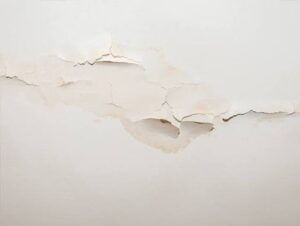
- Bubbling or peeling paint
- Persistent musty odors
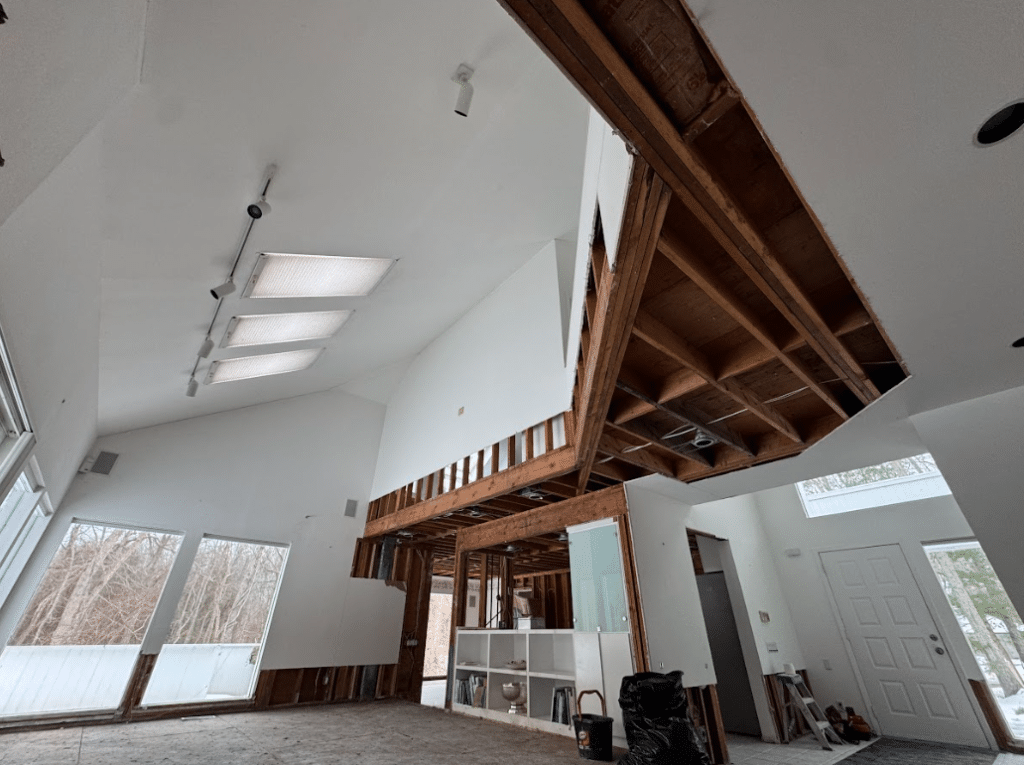
These signs often indicate water damage behind walls or under flooring. For example, sagging ceilings may suggest water saturation above. Likewise, warped floors may signal subfloor damage.
If you notice any of these issues, immediate action is essential. You can also learn more about early response in our blog post, “24/7 Emergency Water Damage Restoration in East Hampton: What to Expect“
💧NEED A FAST COST ESTIMATE
Where Structural Water Damage Usually Occurs
Structural water damage can appear in several parts of your home. However, certain areas are more prone to hidden moisture and long-term damage. Identifying these areas helps you catch problems earlier.
Basements and crawlspaces are common locations for structural damage. These areas often experience flooding and moisture buildup. Similarly, ceilings affected by roof leaks can develop hidden damage over time.
Other high-risk areas include:
- Behind drywall from plumbing leaks
- Under hardwood flooring or carpets
- Around windows and doors
- Inside walls near kitchens and bathrooms
Homes in Southampton, Montauk, and Sag Harbor are frequently exposed to these risks due to coastal conditions. Therefore, regular inspections are highly recommended.
How Professionals Detect Hidden Structural Damage
Hidden structural damage requires more than a visual inspection. While surface signs provide clues, specialized tools are needed for accurate detection. At East End Flood & Fire Restoration, we use advanced technology to assess damage.
Our process includes:
- Moisture detection sensors
- Thermal imaging cameras
- Moisture mapping systems
- Structural drying evaluations
These tools allow us to identify water damage in walls and structure without unnecessary demolition. Additionally, they help determine the severity of the damage and guide the restoration process.
If you are unsure whether damage is structural, a professional inspection is the safest choice. Early detection prevents further deterioration and reduces overall costs.
📄 PREVENT COSTLY STRUCTURAL DAMAGE
What Happens If Structural Water Damage Is Ignored?
Ignoring structural water damage can lead to serious consequences. While the problem may seem minor at first, it often worsens over time. This is especially true in humid environments like Long Island.
Water-damaged materials begin to deteriorate. Wood may rot, drywall may weaken, and flooring may become unstable. Additionally, mold growth becomes more likely, creating health risks.
Long-term effects include:
- Compromised structural integrity
- Increased repair costs
- Poor indoor air quality
- Safety hazards from weakened supports
To understand how quickly mold can develop, read: How Quickly Does Mold Grow After Water Damage?
Taking action early protects both your home and your health.
How Water Mitigation Protects Structural Materials
Water mitigation is the first step in preventing structural damage. It focuses on removing water and controlling moisture before it spreads. This process is essential for maintaining structural integrity.
Our team uses industrial-grade air movers and dehumidifiers. These tools remove moisture from wood, drywall, and subflooring. Additionally, moisture mapping ensures no hidden areas are missed.
Fast response is critical. The longer water remains, the more damage it causes. That is why 24/7 emergency water damage restoration is so important.
If you want to understand repair costs, visit: How Much Does Water Damage Restoration Cost in New York?
When to Call a Water Damage Restoration Professional
Knowing when to call a professional can save you from major repairs. While minor issues may seem manageable, structural damage requires expert attention.
You should contact a professional if:
- You notice structural water damage signs
- Water damage affects large areas
- There is hidden moisture behind the walls
- Mold growth is suspected
At East End Flood & Fire Restoration, we provide expert inspections and restoration services across East Hampton and the Hamptons. Our team ensures accurate assessment and complete recovery.
Final Thoughts: Don't Ignore Structural Water Damage Signs
Structural water damage signs should never be ignored. Even small warning signs can indicate deeper issues within your home. By recognizing these signs early, you can prevent costly repairs and protect your property.
At East End Flood & Fire Restoration, we specialize in identifying hidden damage and restoring structural integrity. Our goal is to help homeowners act quickly and confidently.
Frequently Asked Questions
What are the most common structural water damage signs?
Common structural water damage signs include sagging ceilings, warped floors, cracks in walls, soft spots in flooring, and musty odors. These signs often indicate that moisture has reached structural materials, such as framing or subfloors, and should be inspected immediately.
How do structural water damage signs differ from surface damage?
Structural water damage signs affect core materials like beams, subfloors, and load-bearing walls. In contrast, surface damage only affects visible areas, such as paint or drywall. Structural damage is more serious and often hidden behind walls or under flooring.
Can structural water damage signs appear over time?
Yes, structural water damage signs can develop gradually. Hidden moisture may take days or weeks to weaken materials. Over time, this leads to visible issues like cracks, warping, and sagging, especially in humid environments like East Hampton.
Are structural water damage signs dangerous for a home?
Yes, structural water damage signs can indicate serious risks. If left untreated, they can weaken the home's structural integrity, cause wood rot, and lead to collapse in severe cases. Immediate inspection and water mitigation are critical.
When should I act on structural water damage signs?
You should act immediately when you notice structural water damage signs. Early action prevents further damage, reduces repair costs, and limits mold growth. Contacting a professional restoration company ensures accurate assessment and proper structural drying.
Protect Your Home from Structural Water Damage Today
Water damage does not fix itself. In fact, it gets worse over time. That is why early detection and professional help are essential. If you notice any structural water damage signs, do not wait.
Our team is available 24/7 to provide inspections and emergency restoration services in East Hampton and throughout the Hamptons. Call us now to further avoid structural water damage. We are here to protect your home and restore your peace of mind.
🚨 GET EXPERT HELP TODAY